By Chris Hart
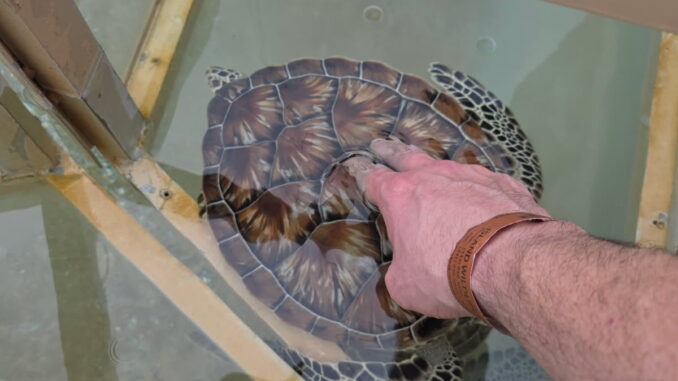
Last week, I went on cruise for my birthday and one of the stops along the way is a small island called Cayman Island. One of the places I was very interested in visiting is called Cayman Turtle Centre. This place was founded in 1968 as “Mariculture Ltd” than later changed to “Cayman Turtle Farm” by a group of American and British investors. The first reason this establishment was founded because they were going to breed the Green Sea-Turtle for the local food consumption without depleting the wild population of the species.
By the mid 1970’s the establishment housed nearly 100,000 turtles an expansion is required for a substantial investment of products. When Citibank and The Bank of England CDFC did place a receivership of May 1975 it was financed of its operation, until CDFC, bought the assets and changed the name to “Cayman Turtle Farm Ltd” by the early of 1976.
By this time during the early 2000’s the population took a dramatically hit, there were no nesting sites and overfishing in the process. In 2001 had a major setback with the Centre (the research, attraction and breeding) in which is located next to the sea on November 4th, 2001, when a very large waves in which was generated by Hurricane Michielle crashed into the facility. Even though the Hurricane was 90 miles away with little wind, but the waves did wash all the turtles of different sizes ranges from hatchlings to 600-pound adults out to the sea.
The Cayman residents responded very quickly to rescue the turtles in which many were saved at the time. Months later, the turtles with the yellow-tagged from the Centre were spotted around the island following the Hurricane Michielle. The sad situation was about 75% of the breeding turtles were lost. In which the Centre released, and meat supply program were reduced to an effort to rebuild the population followed the devastation from the Hurricane Michielle.
After the disaster, Cayman Islands government wanted to see a new vision of the Centre, so they decided to build a new facility but this time away from the sea, so it would be no longer in danger from future Hurricanes. With the new park becoming an expansion facility in which included a new nature park, they changed the name to “Boatswain’s Beach” which is on a 23-acre land includes a nature trail and aviary as a reef lagoon in which visitors and snorkel with the native fish and other local sea life, also with the Green Sea-Turtle. The Centre also added a water lagoon and waterfall with an addition to a predator tank where reef sharks would habitat. By 2010 they changed the name again to “Cayman Turtle Centre: Island Wildlife Encounter” and in 2012 they added a new feature to the establishment, a waterslide to its freshwater lagoon.
The Cayman Turtle Centre is one of the kinds in the world, also the only facility has achieved the second generation of Sea-Turtles bred in captivity. It also the only one to have successfully breed the endanger Kemp Ridley turtle in captivity. 100 scientific papers have been either presented or published for work in a collaboration with the researchers at the Cayman Turtle Centre. Sparky is largest (600 pounds) turtle and the oldest one (She is 95 years old) in that facility, she has laid over 25,000 eggs in her lifetime.
Unfortunately, the Centre does come with controversy. in the 2000’s they have been under attack from animal welfare even conservation groups have claimed the Centre is failing to meet the needs of its species and animals for its care and does pose a threat to the wild turtles. Organizations like International animal protection groups, World Society for Protection of Animals (WSPA) for poor water quality, overcrowding, unsupervised human handling, even heightened level of diseases and defects among the creatures.
The Sea-Turtle Conservancy a world’s oldest group, and WSPA has launched a major campaign to stop Cayman Turtle Centre for breeding turtles for human consumption, even Sir Paul McCartney (former member of the Beatles) has supported the campaign. Paul has urged the Centre shift towards a more humane, sustainable, and even profitable alternative. The House of Commons, Earth Day Motion (EDM) in 2012 the Cayman Turtle Centre calls on UK Government to condemn the practices of producing turtle meat and moving forward for practices that will promote the protection of the turtles.
The Centre has denied these allegations of cruelty and congenital defects and does stand by its claim in which they have released 31,000 Green-Sea Turtles into the wild since first established. WSPA has come forward that on an average, the Centre has only released 27 turtles per year since 2007. The Cayman Turtle Centre has confirmed that Hurricane Michielle did wipe out 75% of the turtle breeding population. The Centre has cut back on the number of releases annually, as the stocks being rebuild in its recent releases it has been increasing with 75 turtles in 2011 and 150 in 2012. Cayman Island Department of the Environment released the data it does show that the turtles released as hatchlings or yearlings from the Centre decades ago, are becoming more sexually mature and now returning as adults to nest in Grand Cayman’s beaches. The years between 1999 and 2003 the mean annual number of Green Sea-Turtles nests in Grand Cayman was 16.4
There has been a huge dramatic increase of the number Green Sea-Turtles nests on the island in recent years, has reaching high as 181 in 2012. Even sightings of “living-tagged” nesting has been confirmed that these nests were laid by the turtles that were released from Cayman Turtle Centre.