
By Gavin Truckenmiller
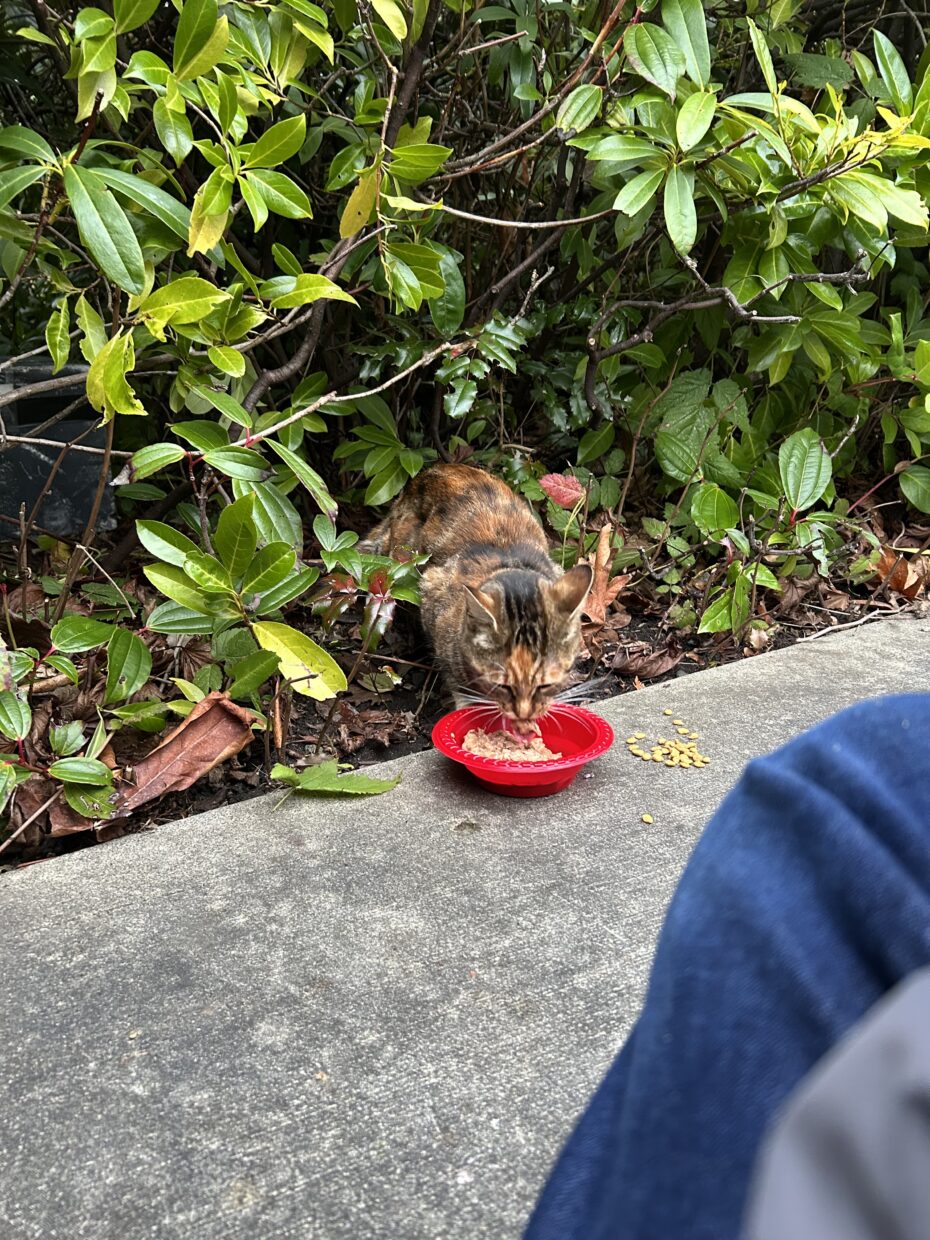
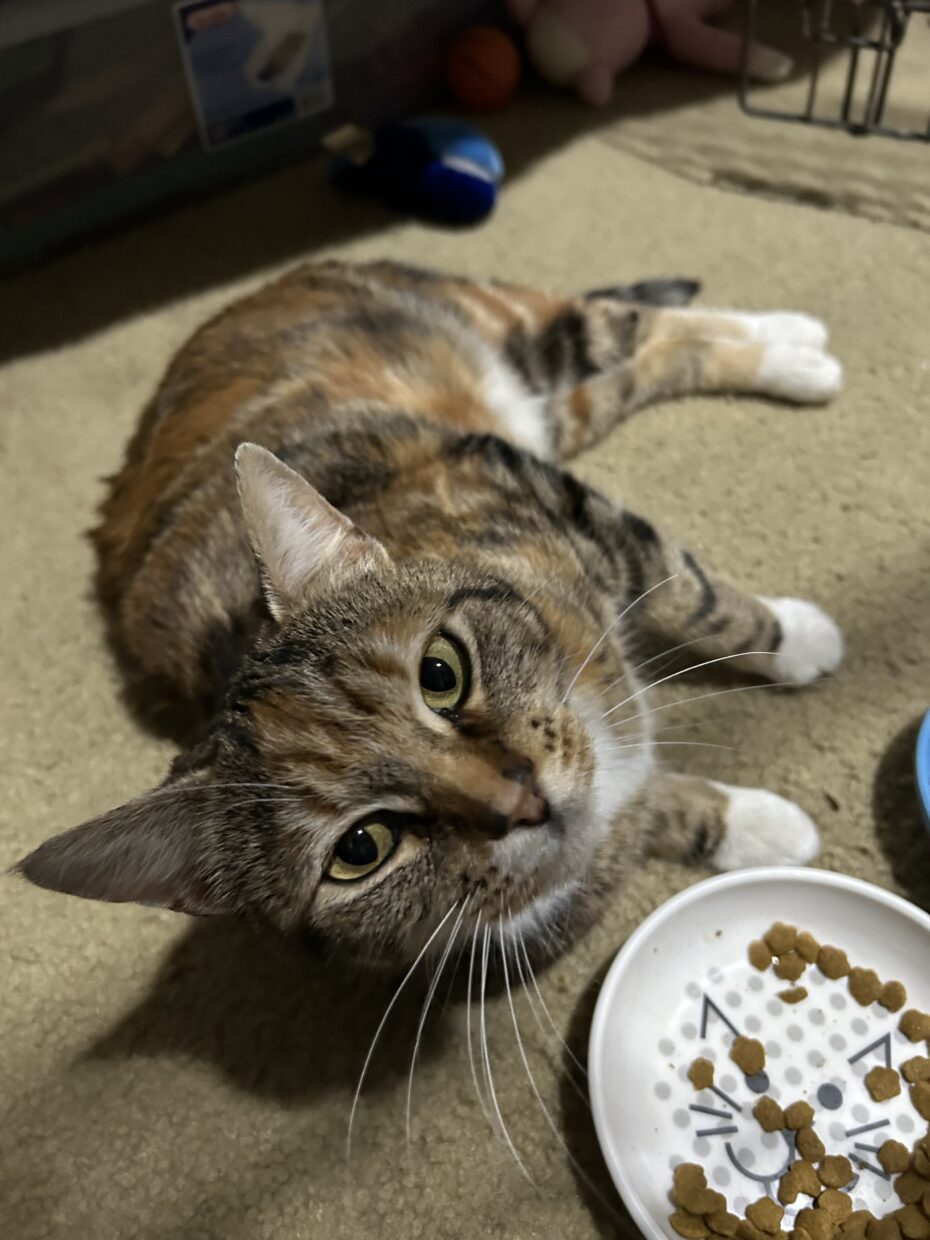
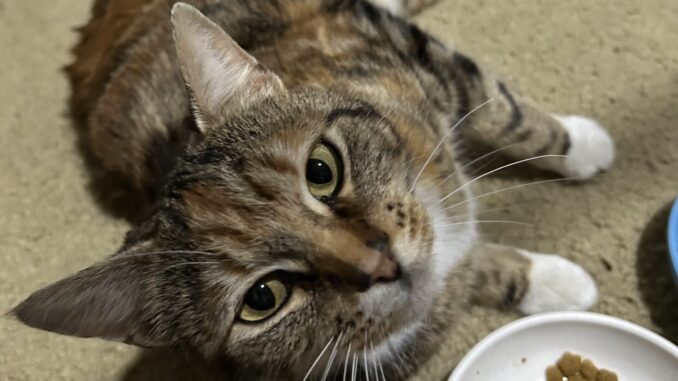
After a months long rescue process on the Peninsula College campus, this emaciated tortoiseshell tabby is now recovering and will soon be looking for a loving home.
On the evening of February 3rd, 2026, a burglar was apprehended at Peninsula College, culminating a weekslong effort by Campus Safety, a PC theater student, and a dedicated volunteer with support from a local organization. The suspect had previously been caught stealing scraps from garbage cans on campus.
The burglar was a half-starved tortoiseshell tabby cat, commonly called a torbie, and it was formerly someone’s pet.
The nonprofit organization that assisted with the rescue of this cat, Spay to Save, is on a mission to save dogs and cats from a hard and dangerous life by spaying and neutering those already in the wild through their Trap-Neuter-Return (TNR) initiative. In addition, they also provide low cost spay and neutering services through their mobile spay/neuter clinic to pet owners who would be normally unable to afford the operation. This helps reduce the number of new strays, in turn reducing the strain on local animal shelters and the communities in which the strays live. According to the Spay to Save website, their efforts reduced the amount of shelter intakes of both dogs and cats by over half between 2012 and 2017. And this service is entirely reliant on community support and donation.
Two community members who volunteered their time to make the recent rescue of the torbie possible are Cindy Perry and PC theater student Rose Halverson. The former has previously collaborated with Spay to Save and other community organizations in efforts such as assisting the population of stray cats living on Ediz Hook. She worked with Campus Safety officer Cori Lukens and Marion Wagner, the TNR Coordinator for Spay to Save, to set up a feeding station next to the Peninsula College Little Theater. The feeding station was equipped with a trail camera supplied by Spay to Save, which was angled as to only be able to take pictures of any animals who stopped to feed at the station and not any passing students. The station was then kept stocked by Halverson and Perry until the cat was regularly returning to that spot. This process was not all smooth sailing, however; unfortunately, several individuals messed with the feeding station. In one case, the feeding station was removed and thrown on top of the bushes nearby. In the end, a sign had to be put up warning that the station was not to be messed with.
From there, normal TNR procedure is to move the food inside of a trap, but to leave the trap unset at first until the cat is comfortable. The equipment Spay to Save uses for this is live traps manufactured by Tru Catch Traps, which do not cause any harm to the animal. However, in this case the torbie cat willingly went into a pet carrier without needing to be trapped, a sure sign that she had once been someone’s pet.
This was made even more certain by the fact she turned out to already have been spayed. If this procedure had been done by Spay to Save, she would have had a clipped ear, which is a non-harmful practice that is used in the TNR program to mark stray cats that have already been spayed and returned to the wild, so that they are not unintentionally recaptured.
Because the torbie cat was formerly a pet, has a friendly demeanor, and was not doing well in the wild, she is not going to be rereleased and instead will be put up for adoption through one of Spay to Save’s partner organizations, Best Friends Pet Care or PetSense. If you are interested in making a difference for animals like her, or know of a stray who could use Spay to Save’s assistance, you can find out more on their website: https://spaytosave.org/