Peninsula College based Coastal Hazards Specialist Ian Miller reports increased demand for sea level rise data
By Gavin Truckenmiller
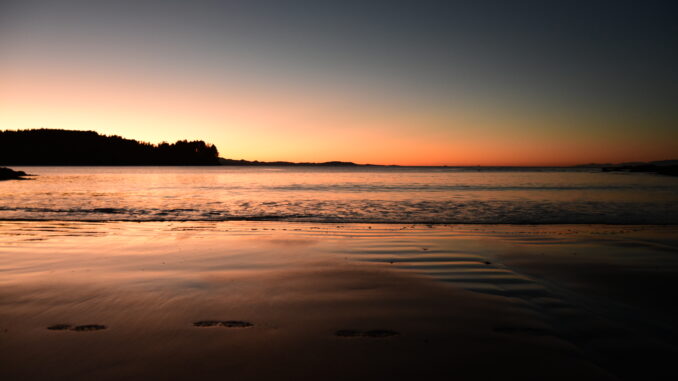
The scenic coastline of the Olympic Peninsula, home to both a National Park and a Marine Sanctuary, draws millions of visitors every year. Many residents and businesses rely on both the ocean and the tourism it draws. But this remarkable landscape is not static – it is constantly changing. Changing coastlines affect the people who visit, live, and make their livelihood there. And few people know this better than Ian Miller.
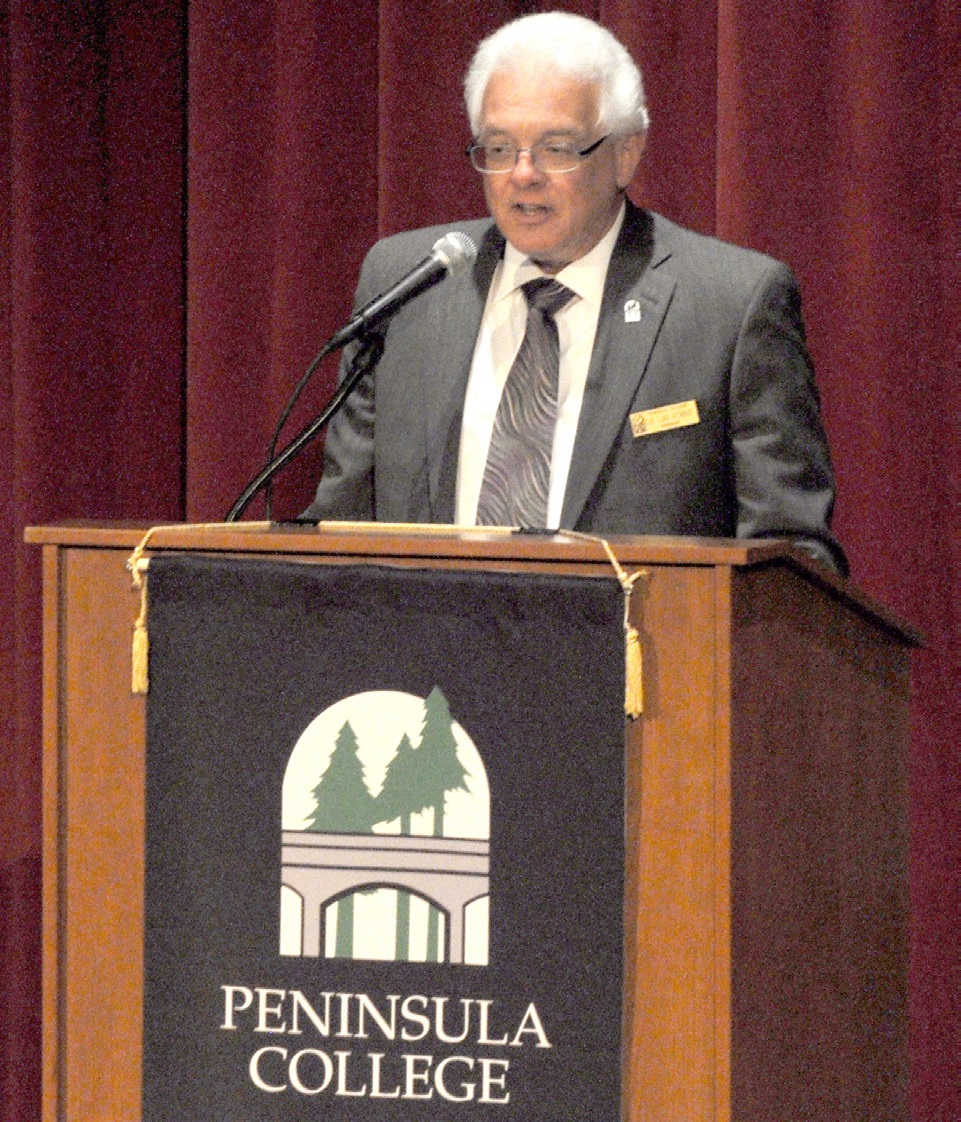
Miller is a Coastal Hazards Specialist based at Peninsula College through the Washington Sea Grant program, which is run by the University of Washington. His task is to provide relevant research to support community efforts and organizations. And that research is in demand.
“One of my focuses is on sea level rise over time, and there’s definitely been significant growth in demand for that data,” Miller says. “People want to know what we call exposure information, just sort of like, hey, how high will the water get? And then more recently we’ve sort of tried to really move jurisdictions, especially into what we call vulnerability, which is where you kind of take that exposure information and you couple it with what are the things on the shoreline that we care about. Like whether they are infrastructure assets or habitats or cultural assets or, you know, just anything that drives a sense of value for people on the shoreline.”
For many coastal Native American tribes such as the Jamestown S’Klallam, the relationship between the land and the sea is not just a part of where they live, but also an important part of their history and traditions. The Jamestown S’Klallam were the first community on the Peninsula to take steps to address climate risks. But more communities and organizations have followed in their footsteps, and now the topic is being addressed on an even wider scale.
“In 2023, our state legislature passed a law now requiring that jurisdictions account for the impacts of sea level rise in their shoreline master plans, which is one of the main tools that we have in Washington for managing the shoreline,” says Miller. “What exactly that means is still being worked out by state agencies. But the expectation is that this year there will be rules published that then define what jurisdictions have to do to satisfy that requirement. And the expectation is that we’re even going to see another huge upturn curve in terms of that kind of assessment.”
These assessments are for a very important reason – to determine what effects environmental changes may have on the various coastal communities. “I always frame it as ‘going beyond the blob’,” Miller relates, “because what we did historically a lot was make these maps with these big blue blobs that were like, hey, here’s where the water will be in the future. People look at that and they go, ‘Oh my god, that’s a big blue blob. That must be bad.’ But what really matters is what’s under that blue blob that the water is potentially interacting with: infrastructure assets or habitats or cultural assets or, you know, just anything that drives a sense of value for people on the shoreline.”
A growing number of communities on the Peninsula are concluding that to protect these coastal values, action must be taken now. As Miller explains, “If you kind of have this information now, then you can start to pick away at these things before they become crises.”